WSW, NY, September 30th, 2026, FinanceWire
A missing magnet can stop a car factory even when every other part is available. China's rare earth export controls have already forced automakers to cut production, and Japan's continuing supply difficulties show why buying from an allied country does not automatically remove exposure to Chinese materials. The West needs more factories that can turn alternative supplies into the finished magnets its industries use.
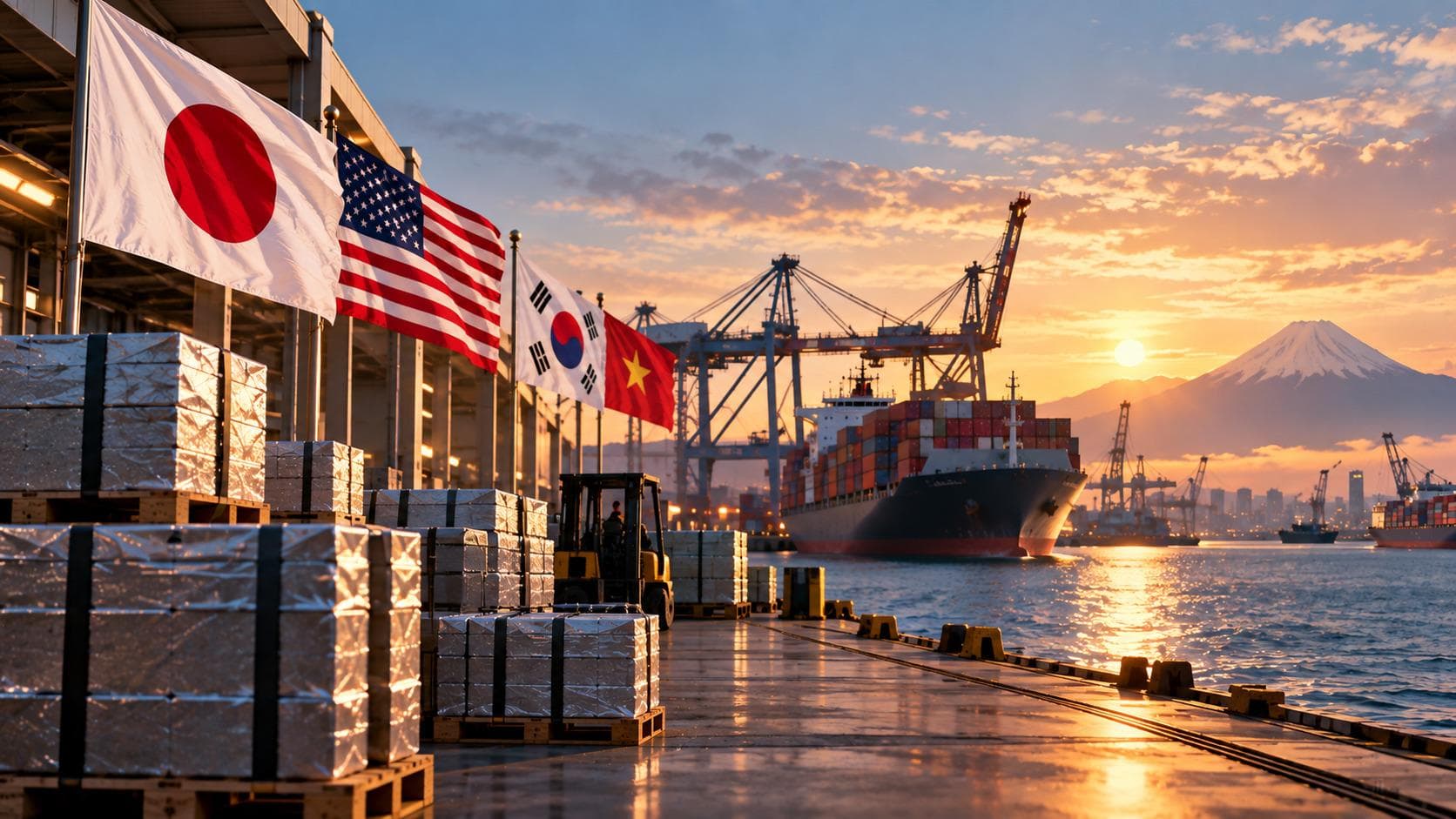
Evolution Metals & Technologies Corp. (NASDAQ: EMAT) already makes rare earth magnets, drawing on more than 18 years of commercial-scale production in South Korea. It has also begun receiving non-China neodymium-praseodymium (NdPr) metal through a supply arrangement involving Japanese and Vietnamese businesses. That combination could help it serve allied industrial buyers seeking additional sources beyond China.
The company's leadership brings direct defense experience to that task. President Andrew Knaggs served as a Deputy Assistant Secretary of Defense in the first Trump administration, and board member Chris Miller was acting Secretary of Defense in that administration. Retired Air Force General Thomas Bussiere, who led Air Force Global Strike Command until 2025, joined the board in August.
Japan's Shortage Has Become an Allied Concern
Reuters reported on September 24 that U.S. and Japanese officials and company representatives had met earlier that month to discuss permanent-magnet and yttrium supply bottlenecks. The U.S. Department of Energy hosted the talks, with Japan's Ministry of Economy, Trade and Industry involved. Yttrium serves different applications, including heat-resistant coatings, but its inclusion alongside magnets shows the breadth of the materials problem facing both countries.
Japanese companies are already warning about the consequences. According to the same report, more than two-thirds of nearly 200 Japanese corporate filings in May and June that mentioned rare earths said export controls were hurting business or could do so. A separate September 4 Reuters report described permit delays and lengthy customs inspections affecting Japanese companies, while some Chinese suppliers were declining U.S. shipments because they feared repercussions from Beijing.
Diplomacy has provided more time. The National Association of Manufacturers reported that the September summit extended the U.S.-China trade truce to January 10. Yet the White House's September 25 account said the countries were still working to address rare-earth and other critical-mineral shortages. An extended truce can ease immediate pressure without providing manufacturers with an alternative supplier.
The concentration remains substantial. The International Energy Agency estimates that China produced 94% of the world's sintered permanent magnets in 2024. These are strong magnets used in applications such as electric vehicles and industrial motors. Their manufacture requires processing, metalmaking and alloying before material can become a finished component. Adding a mine alone leaves those manufacturing steps to be supplied.
A Supply Relationship That Reaches the Factory
Evolution Metals has begun connecting alternative material to operating magnet production. On July 22, the company announced receipt of its first shipment of NdPr metal, a principal ingredient in its magnets. It contracted with Senri Trading for material from SRE Vietnam, a wholly owned subsidiary of Japan's Tokai Trading. The initial delivery was the first stage of an arrangement intended to scale with the company's production.
Japan therefore features on both sides of the story: its manufacturers need more reliable material access, while Japanese businesses are helping establish alternative supply routes. For Evolution Metals, the disclosed relationship supplies an input for manufacturing. Continued deliveries at greater volumes will be needed as the business expands.
The company also has evidence that it can meet demanding customer specifications. In June, it announced quality certification with two global Tier-1 electronics manufacturers across six grades of sintered magnets, including grades designed for high temperatures. It was already producing the certified grades at commercial scale. Those qualifications establish manufacturing capability for the specified electronics customers; new customers and applications typically require their own qualification.
Heavy rare earths are the next supply link to watch. According to the U.S. Department of Energy, elements such as dysprosium and terbium are used in sintered magnets to help them resist demagnetization at high temperatures. China has placed both under export controls. The July delivery was NdPr, a different input. Making larger volumes of heat-resistant grades entirely from non-China materials would also require non-China heavy rare earths, whether mined or recovered, and whether ex-China producers can supply them to Evolution Metals is the question to watch. The company has also outlined plans to recover material from end-of-life electronics, which it calls urban mining.
Evolution Metals is now expanding its existing magnet manufacturing operations in Pohang, South Korea. Its September 10 disclosure says 13 additional ULVAC production machines, covered by binding purchase orders, are scheduled for delivery and installation in November. Management expects annual capacity to rise from approximately 1,000 to 10,000 metric tons, including about 6,000 tons of sintered magnets. The target depends on financing, facility and power work, commissioning and sufficient feedstock. This expansion is separate from the planned U.S. industrial campus.
Japan's experience makes reliable magnet production a practical industrial priority across the allied economies. Evolution Metals is approaching that need from an operating base, with customer-qualified products already in production. Its expansion could give Western manufacturers more of what export negotiations alone cannot provide: an additional source of finished magnets outside China.
Recent News Highlights from Evolution Metals & Technologies Corp. (Nasdaq: EMAT)
Evolution Metals & Technologies Provides Initial Revenue Guidance of $400-460mm for Fiscal Year 2027
Important Disclaimers and Disclosures: The author, Wall Street Wire, is a content and media technology platform that connects the market with under-the-radar companies. The platform operates a network of industry-focused media channels spanning finance, biopharma, cyber, AI, and additional sectors, delivering insights on both broader market developments and emerging or overlooked companies. Wall Street Wire is not a broker-dealer or investment adviser. References to market size estimates, valuations, price targets, or other third-party data are provided strictly for informational purposes. Wall Street Wire receives cash compensation from Evolution Metals & Technologies Corp. (the "Issuer") for coverage and awareness services, which are provided on an ongoing subscription basis. The content above is a form of paid advertising and promotion and is for informational purposes only and does not constitute financial or investment advice. This article may contain forward-looking statements about the Issuer's products, plans, or prospects that are subject to risks and uncertainties; actual results may differ materially, and readers should review the Issuer's public filings on SEC EDGAR (sec.gov/edgar) for full risk factors. Market size figures, research estimates, or other third-party data referenced in this article are quoted from publicly available sources believed to be reliable; however, we do not independently verify or endorse them, and additional figures or estimates may exist. Full compensation details, information about the operator of Wall Street Wire, and the complete set of disclaimers and disclosures applicable to this content are available at: wallstwire.ai/disclosures. This article should not be considered an official communication of the Issuer. Images may be computer generated and are for entertainment and visualization purposes only, and may not be an accurate or exact depiction of the technology.
ContactWall Street Wire
[email protected]