Berlin, Germany, February 18th, 2026, Chainwire
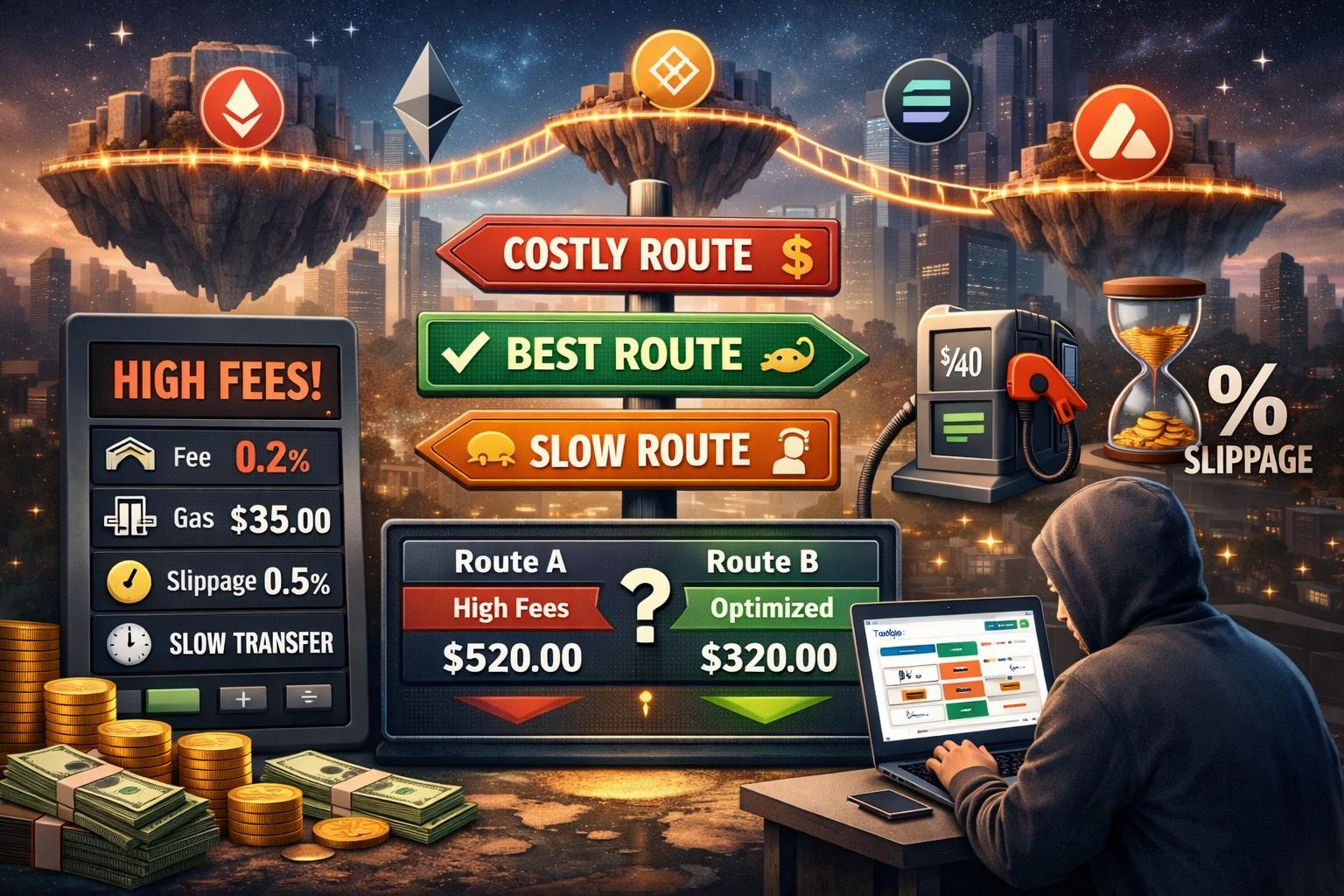
Jumper Exchange released new cross-chain routing insights examining the "all-in" cost of cross-chain transfers as DeFi activity spreads across more blockchains. The analysis, detailed in the company's December 2025 report "Jumper Exchange Releases Insights From 50+ Blockchain Networks," highlights how users often underestimate the combined impact of bridge fees, gas costs, slippage, and execution delays on final execution outcomes.
"Everyday users want cross-chain execution that feels straightforward and dependable," said Jordan Neary, Marketing Lead at Jumper Exchange. "We're focused on reducing the risk that comes from complexity—so users can move, swap, and deploy assets without juggling multiple apps and assumptions."
The December 2025 report from Jumper Exchange noted that as DeFi expands across an increasing number of networks, liquidity is no longer defined by a single chain or venue, which has amplified the importance of routing quality since cross-chain execution now plays a direct role in how quickly users can deploy assets into opportunities.
Users who choose inefficient transfer routes can end up paying materially more in total execution costs than necessary, particularly once fees, price impact, and timing effects are accounted for. The company added that route comparison is often difficult because many platforms provide limited transparency into how fees and execution quality vary across different options.
Cross-chain transfers have historically required users to compare multiple bridges, estimate fees across chains, acquire gas on the destination network, and complete swaps across different interfaces—steps that can raise the chance of failed transactions, incorrect network selection, or unexpected costs during volatile conditions.
Bridge fees are commonly 0.1% to 0.3% of the transfer amount, while gas costs depend heavily on network conditions; on Ethereum mainnet during busy periods, transactions can cost from $5 to $50 or more, while many Layer 2 networks generally process transactions for significantly lower fees.
To address these issues, Jumper Exchange said its routing engine compares available routes across supported bridges and decentralized exchanges in real time. The platform aggregates cross-chain paths through integrated infrastructure to reduce the number of steps required to bridge and swap, while abstracting underlying complexity behind a straightforward user experience. Instead of optimizing for a single metric, the system evaluates liquidity, protocol fees, gas costs, and potential slippage to identify routes expected to deliver more efficient execution.
"Retail and professional users alike are looking for consistency in execution rather than spending time comparing quotes from individual platforms," said Neary. "Our smart routing engine is built to focus on net outcome — the amount the user actually receives in their wallet after fees and gas — while keeping the experience as simple as a single click."
The upgraded routing engine continuously scans integrated decentralized exchanges and bridges and can simulate combinations of pools and routes before a trade is submitted on-chain, with the ability to distribute an order across multiple paths when that improves aggregate pricing or avoids pools with limited liquidity and higher price impact. Speed is also a key driver of total cost, as depending on the route and network conditions, transfers may complete in minutes or take several hours to finalize—delays that can impact users pursuing time-sensitive opportunities.
Neary added that simplifying routing is also meant to improve usability for less experienced participants. "Many people still see cross-chain swaps as complex or risky because there are so many protocols and bridges to navigate," he said. "By abstracting that complexity away and clearly showing the route and expected output, we want to make it easier for users to feel comfortable moving liquidity wherever they need it."
For routes involving non-EVM ecosystems, Jumper Exchange said users should also consider additional trade-offs. While transaction fees on networks such as Solana are typically low, bridge connections between Solana and EVM-based chains can involve higher protocol fees due to technical complexity; the company provides guidance on how to bridge Solana to help users evaluate options.
Jumper Exchange said it aggregates 23 bridge protocols and 24 decentralized exchanges across more than 50 networks to simplify route comparison and improve transparency around expected costs. Before a user confirms a transaction, the platform provides route previews displaying estimated output amounts, fees, and execution characteristics. Users can review the proposed path before confirming a transaction, including the protocols and chains involved, to better understand how the trade will be executed.
The company emphasized that it does not take custody of user funds, stating that assets move directly between user wallets and underlying protocols while users retain the benefits of aggregation and optimization.
The full December 2025 insights report is available at
https://chainwire.org/2025/12/24/jumper-exchange-releases-insights-from-50-blockchain-networks/. Additional information about supported routes is available at www.jumper.exchange.
About Jumper Exchange
Jumper Exchange is a multi-chain liquidity aggregator that connects users to dozens of blockchain networks through a single interface. By integrating leading bridges and decentralized exchanges, Jumper provides streamlined cross-chain swaps and asset transfers, focusing on route quality, minimized slippage, and simplified UX for active cross-chain strategies.
ContactMarketing Lead
Jordan Neary
Jumper Exchange
[email protected]