WSW, NY, September 3rd, 2026, FinanceWire
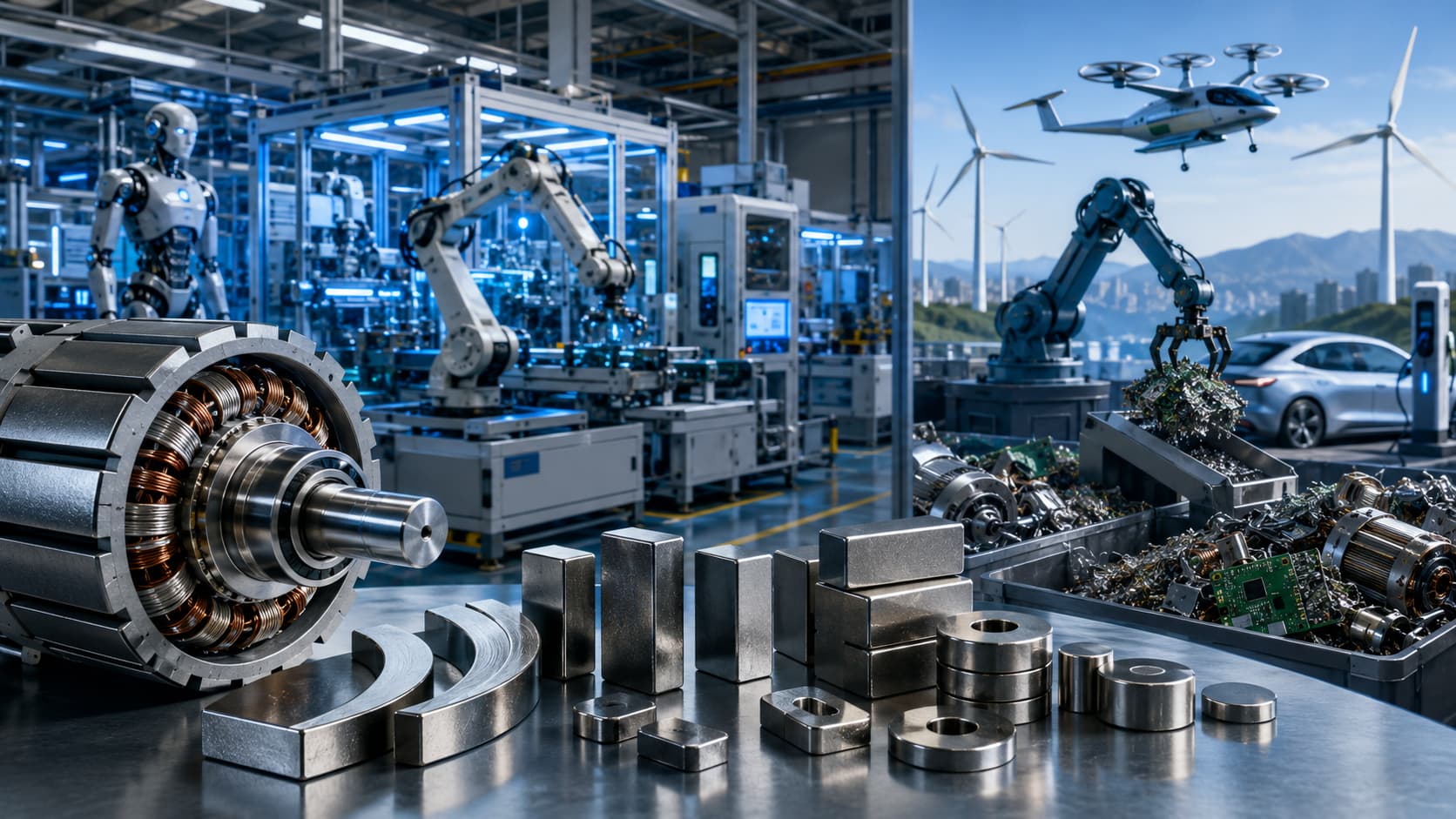
Rare earth magnets are the small but exceptionally strong magnets at the heart of many high-performance electric motors, and they turn up in everything from EV drive motors and wind turbines to factory robots and precision-guided weapons. The industry that makes them faces a two-sided squeeze. Demand for the strongest, most heat-resistant versions is climbing into products that barely existed five years ago, such as human-shaped factory robots and electric air taxis. At the same time, most of the magnets already in use are never recovered: when the motors, electronics, and equipment that hold them are scrapped, the valuable magnet material inside is usually lost rather than recycled. Evolution Metals & Technologies Corp. (Nasdaq: EMAT) is building a business aimed at both ends of that problem: making new magnets and recovering old ones. The company recently placed firm orders for 13 specialized magnet-making machines from Japanese equipment maker ULVAC and is targeting roughly 10,000 metric tons of annual magnet output by November 2026.
Manufacturing at Scale
On the manufacturing side, EMAT's track record is real: the company has been making rare earth magnets at commercial scale for more than 18 years. In June 2026 it passed the demanding supplier-approval testing (the industry calls it “qualification”) at two Tier-1 electronics OEMs, the big brand-name manufacturers that build finished products, clearing six different grades of neodymium magnet (the NdFeB family, short for neodymium-iron-boron), including versions engineered to hold their strength at high temperatures. Of the roughly 10,000 metric tons of capacity it is targeting, about 6,000 tons would be “sintered” magnets, the premium type made by pressing magnetic powder into shape and then fusing it into a dense, solid magnet at high temperature (that heating step is what “sintering” means), which is what the most demanding applications require.
A supply chain that steers around China is also taking shape, which matters because China dominates rare earth processing today. In July 2026, EMAT received what it described as, to the company's knowledge, the first commercial shipment of non-China NdPr metal (neodymium-praseodymium, the key raw material for these magnets) received by a U.S.-listed producer for use in DFARS-compliant magnet manufacturing. The five-metric-ton shipment was produced by SRE Vietnam under EMAT's supply arrangement with Japan's Senri Trading. That matters because of a Pentagon purchasing rule, DFARS 252.225-7052: beginning January 1, 2027, it generally restricts the U.S. Defense Department from buying NdFeB magnets whose supply chain runs through China or another covered country (subject to certain exceptions), so a verified non-China source becomes a genuine selling point. To fund the build-out, EMAT has a financing arrangement of up to $100 million from Yorkville Advisors in the form of convertible debentures, essentially loans that can later convert into stock, of which about $25.8 million had been issued by mid-July.
The Next Wave of Demand
What is driving demand beyond defense? Two fast-growing fields, robotics and aircraft, need large numbers of these magnets and unusually precise ones. Human-shaped robots are a good example: each one needs dozens of small, powerful motors packed into tight joints such as elbows, knees, and fingers. Research firm IDTechEx estimates the average humanoid robot contains about 40 motors, and more than 95% of them rely on rare earth magnets. Those compact motors need small, high-strength magnets made to tight tolerances, and the toughest grades have to keep their pull under heat and constant use. Electric aircraft bring similar demands. IDTechEx projects that global demand for these magnets could climb to 332,000 metric tons a year by 2036, up to roughly 70% above today's levels, with robotics as a major driver.
Closing the Loop
The other half of EMAT's strategy is recycling, and it is core to the whole plan. Instead of depending only on freshly mined ore, EMAT recovers rare earth metals and other valuable materials from products that have reached the end of their life, such as old electronics, spent batteries, scrapped motors, and worn-out magnets; the industry calls this “urban mining”, harvesting metals from discarded goods rather than from the ground. Doing that at scale depends on chemical and heat-based refining, known in the industry as hydrometallurgical and pyrometallurgical processing, which separates and purifies the metals so they can be reused. That is a strategic choke point: the International Energy Agency estimates China handles roughly 90% of the world's rare earth refining, so building the capability outside China is one of the hardest and most valuable pieces of the puzzle. EMAT already operates recycling that pulls metals from electronic scrap, including retired equipment from U.S. government agencies, which EMAT describes as a differentiated, recurring source of feedstock, and plans a large-scale U.S. processing facility to expand it.
Put it together and EMAT has cleared its first customer approvals, lined up a non-China source of raw material, and is expanding toward what could become one of the larger magnet operations outside China. That mix could position it to serve robotics, aerospace, and defense customers that need precise, high-grade magnets, while holding down its raw-material costs through recycling. The bigger prizes, though, are still ahead: reaching the roughly 10,000-ton capacity target, taking delivery of and commissioning the ULVAC equipment, and converting additional OEM and defense-supplier interest into contracted volume all remain future milestones, subject to the ordinary risks of scaling up a manufacturing business.
Recent News Highlights from Evolution Metals & Technologies Corp. (Nasdaq: EMAT)
Read this next >>
Jefferies initiates USA Rare Earth stock with buy on vertical integration (NASDAQ: USAR) (REMX)
MP Materials results beat expectations on rising sales, US price support (NYSE: MP)
Important Disclaimers and Disclosures: The author, Wall Street Wire, is a content and media technology platform that connects the market with under-the-radar companies. The platform operates a network of industry-focused media channels spanning finance, biopharma, cyber, AI, and additional sectors, delivering insights on both broader market developments and emerging or overlooked companies. Wall Street Wire is not a broker-dealer or investment adviser. References to market size estimates, valuations, price targets, or other third-party data are provided strictly for informational purposes. Wall Street Wire receives cash compensation from Evolution Metals & Technologies Corp. (the "Issuer") for coverage and awareness services, which are provided on an ongoing subscription basis. The content above is a form of paid advertising and promotion and is for informational purposes only and does not constitute financial or investment advice. Market size figures, research estimates, or other third-party data referenced in this article are quoted from publicly available sources believed to be reliable; however, we do not independently verify or endorse them, and additional figures or estimates may exist. This article may contain forward-looking statements about the Issuer's products, plans, or prospects that are subject to risks and uncertainties; actual results may differ materially, and readers should review the Issuer's public filings on SEC EDGAR (sec.gov/edgar) for full risk factors. Full compensation details, information about the operator of Wall Street Wire, and the complete set of disclaimers and disclosures applicable to this content are available at: wallstwire.ai/disclosures. This article should not be considered an official communication of the Issuer.
ContactWall Street Wire
[email protected]